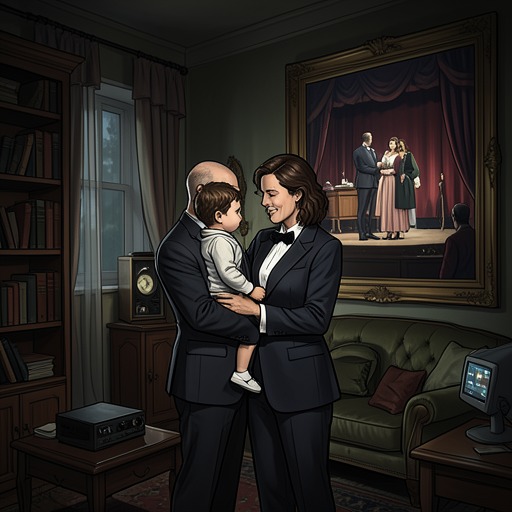
Bobby FaNelli
Luckiest Girl AliveBobby FaNelli, TifAni FaNelli’s father and Dina FaNelli’s husband, is presented through TifAni’s recollections of family life. Those memories sketch a man shaped by expectations about marriage and having a son, and a father who responds awkwardly when confronted with an ordinary but private part of his daughter’s adolescence.
Identity and Family Background
Bobby married Dina five months after they met, only a few weeks after she learned she was pregnant. TifAni’s aunt later described him as furious about the pregnancy, while attributing the marriage to the pressure of his traditional Italian family and his mother’s expectation that he do what was honorable. This account makes family obligation central to the story of his early relationship with Dina, though it comes to the reader through TifAni’s recollection of what her aunt said.
The family expected a boy and planned to name the child Anthony. TifAni believed her father perked up when a doctor told her parents they were having a boy; at her birth, the doctor corrected that expectation. In TifAni’s account, this history feeds her sense that her father had not wanted a daughter and may not have wanted children at all. The narrative presents that belief as her understanding of him, rather than as an independent explanation from Bobby.
Father and Daughter
One remembered encounter begins when Bobby enters TifAni’s room saying he is doing laundry and reaches for clothes on the floor. TifAni reacts immediately, telling him not to touch them, but he has already picked up underwear marked by menstrual blood. He freezes, then stammers that he will get Dina. The episode ends not with a conversation between father and daughter but with Bobby passing the situation to his wife.
TifAni’s recollection dwells on his visible discomfort and inability to address what has happened. The incident is small in scale but telling in its family dynamics: a routine household task brings Bobby into contact with a private fact about his daughter, and his response is to retreat and summon Dina rather than speak with TifAni himself. The scene gives no account of a later discussion or of Bobby’s intentions beyond that moment.
Narrative Role
Bobby appears in these passages as a figure filtered through TifAni’s retrospective judgments and childhood memories. Her account links his expected son to the name Anthony, the doctor’s correction at her birth, and her impression that he was unprepared for a daughter. The laundry episode supplies a concrete counterpart to that broader impression: when faced with a vulnerable, ordinary moment in TifAni’s life, he becomes flustered and defers to Dina.
The evidence offers only brief glimpses of Bobby, not a full account of his character or the longer course of his relationship with TifAni. Within those limits, the contrast between the obligations surrounding his marriage and his awkwardness as a father gives his family role its defining shape.